
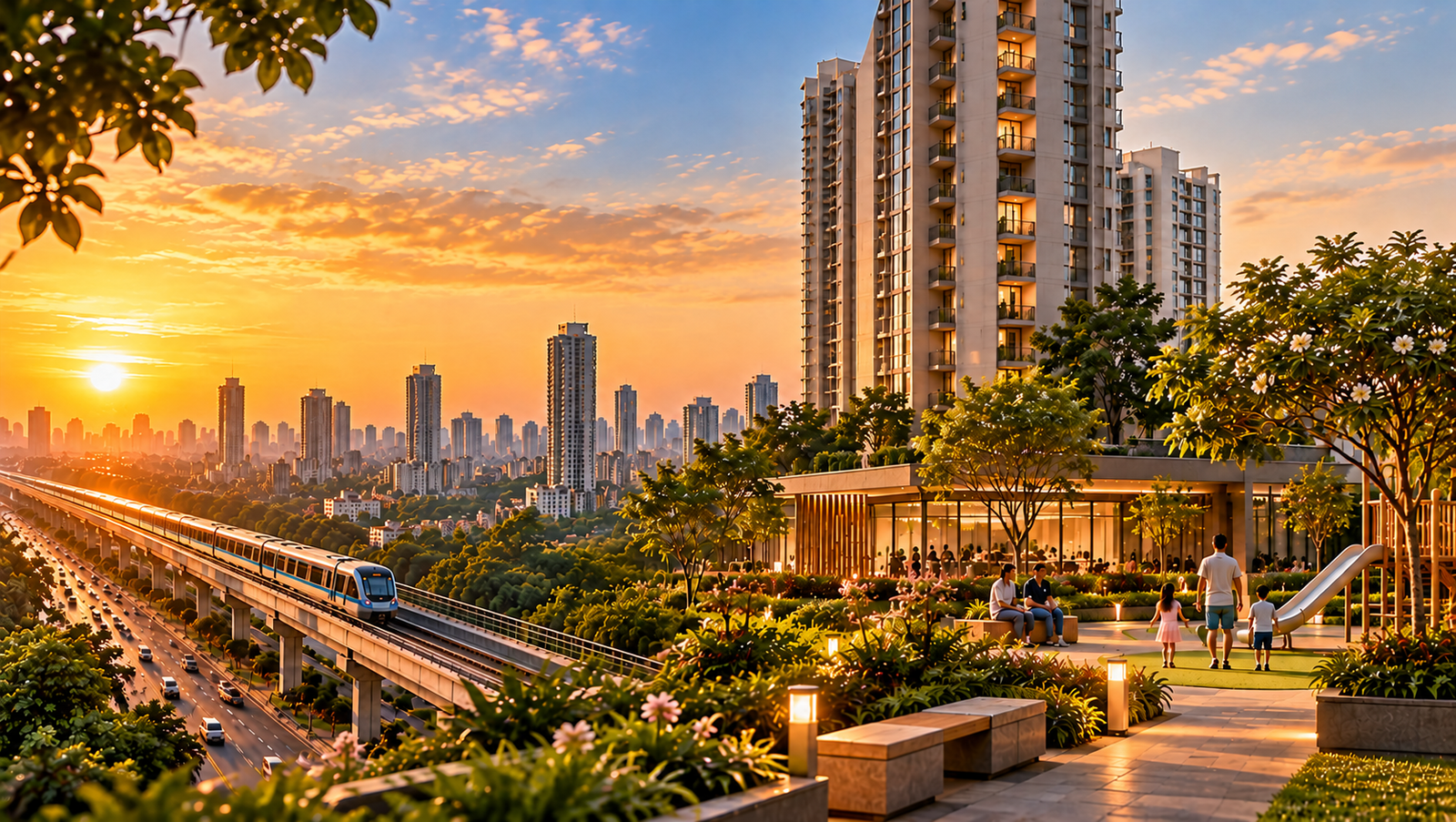
A good residential project is about more than a well-designed apartment or a long list of amenities. The way a project connects to the city, how comfortable the homes are and how easily residents can use shared spaces all contribute to the overall living experience.
For property developers in Mumbai, getting this balance right can be challenging. With limited land and busy neighbourhoods, every part of a residential project needs to be planned carefully. Connectivity, comfort and community work best when they are considered together from the early stages of residential project design in Mumbai.
Connectivity is one of the first things people consider when looking at a new home. But it is not only about how close the project is to a railway station, metro line or major road.
At the city level, developers look at access to public transport, highways, arterial roads and important employment areas. These factors can make a noticeable difference to everyday commuting.
There is also another side to connectivity that is easy to overlook: what happens after you enter the project.
Internal roads, entry and exit points, visitor access and parking all influence how smoothly people can move around the property. A project may be close to a railway station but still experience congestion if vehicles have limited entry points or parking has not been planned properly.
This is why connectivity and comfort in housing should be considered together. Good external connectivity should ideally be supported by practical internal movement and well-planned traffic flow.
Once residents are inside their homes, comfort depends on several everyday details. Natural light, ventilation, room orientation and noise levels can all influence how a space feels.
Cross-ventilation is particularly useful in apartment planning. Placing windows in suitable positions can encourage better air movement through the home and reduce the feeling of a closed or stuffy interior.
Noise is another consideration, especially for homes facing busy roads. The placement of bedrooms, windows and other openings can influence how much external traffic noise reaches the living spaces.
Basic services matter just as much. A beautifully designed apartment can become difficult to live in if water supply is unreliable or power backup is inadequate.
Good residential project design in Mumbai therefore goes beyond visible finishes and attractive interiors. Planning for dependable essential services is an important part of creating a home that works well in everyday life.
Residential amenities can add value to a project, but simply having more amenities does not necessarily make a community better.
A clubhouse, garden, gym or children’s play area needs to be planned around the number of residents who will actually use it. An amenity that is too large for the community can require significant maintenance without being used regularly.
This is where thoughtful community planning for residential projects becomes important. Developers need to consider not only what amenities to provide but also where to place them and how easily residents can access them.
Walkability within a housing society is another detail that can make a surprisingly big difference.
A garden or play area that is only a short and comfortable walk from residential entrances is more likely to become part of residents’ daily routines. On the other hand, an amenity located behind parking areas or along service routes may be less convenient to reach.
Well-planned pedestrian paths can also improve safety and movement within the property. Clearly separated walking areas, adequate lighting and sensible access routes can make residents more comfortable using shared spaces, particularly during the evening.
This makes walkability in housing societies an important part of community planning rather than simply a landscaping consideration.
Amenity planning should reflect the lifestyle and size of the community rather than simply following a checklist.
For example, a family-oriented development may benefit from a practical children’s play area and accessible green spaces, while a project with a large working population may place greater importance on fitness or multipurpose spaces.
The location of these facilities also matters. Developers need to think about how residents will reach them, how they interact with vehicle movement and how much maintenance they will require over time.
Thoughtful amenities planning in Mumbai is therefore about making shared facilities useful, accessible and appropriate for the people who will actually live in the development.
A residential project works best when connectivity, comfort and community are planned as connected parts of the same experience.
For property developers in Mumbai, this means looking beyond individual apartments and considering how residents will travel to and from the project, how comfortable their homes will feel and whether shared spaces genuinely fit into everyday life.
Good connectivity should not create internal congestion. Comfortable homes should be supported by reliable basic services, while community amenities should be easy to reach and practical to maintain.
When these elements are considered from the beginning of residential project design in Mumbai, the result can be a development that feels more practical and enjoyable in everyday use.
A project’s location may provide excellent access to roads and public transport, but poor internal planning can still create congestion. Entry points, parking, visitor access and internal roads all need to work together.
Cross-ventilation helps air move through a home when windows and openings are positioned appropriately. It can improve airflow and contribute to a more comfortable indoor environment.
Not necessarily. A clubhouse should be sized according to the number of residents and the way they are likely to use it. An oversized facility may increase maintenance requirements without providing enough practical value.
Residents are generally more likely to use amenities that are easy and comfortable to reach. Short pedestrian routes, good lighting and separation from vehicle movement can make shared spaces more accessible.
Yes. Reliable water supply and adequate power backup are basic parts of comfortable living. They may not be as visually appealing as amenities, but they have a direct impact on residents’ everyday experience.
Mumbai’s trusted real estate developer since 1984. We build homes that last generations, with quality, transparency, and a commitment to your complete satisfaction.
Visual representations, elevation renders, and floor plans are artist’s impressions for guidance only. Indo Build Enterprise reserves the right to amend specifications as per MCGM and RERA regulations. Registered in 1984, we maintain architectural integrity across all Mumbai urban developments.
© 2026 Indo Build Enterprise. All rights reserved.